
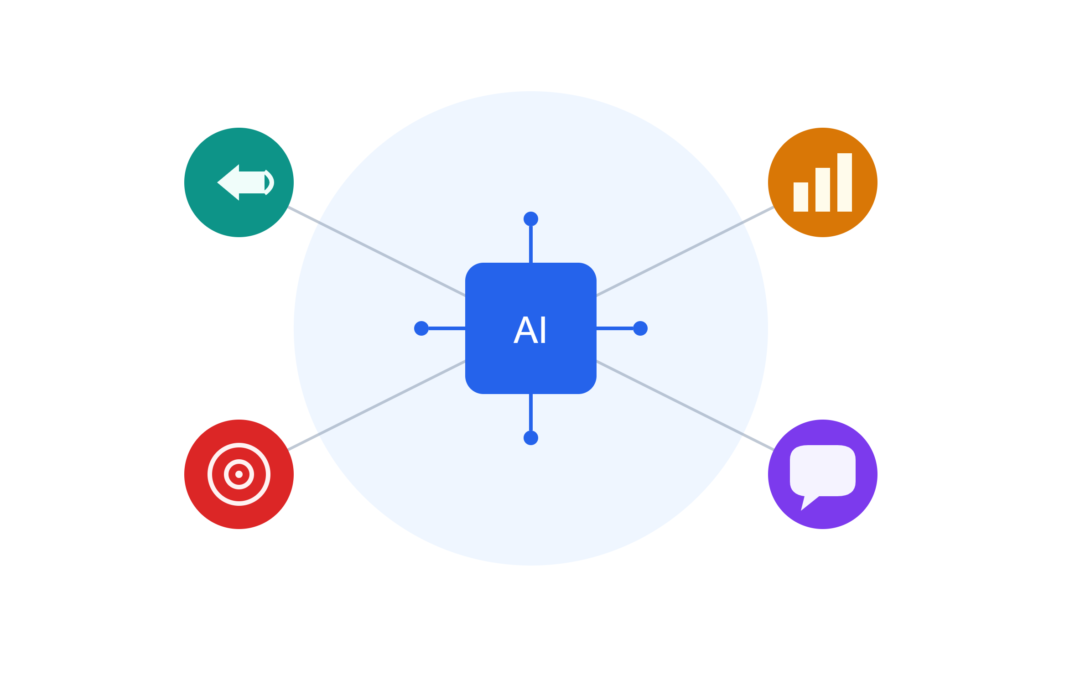
Digital Marketing has entered a new phase with the rise of AI — a shift now widely known as AI Digital Marketing.— from the early days of banner ads and email blasts to the rise of social media and search engine optimization. The latest shift in that evolution is AI digital marketing: the integration of artificial intelligence into the tools, strategies, and day-to-day execution of marketing campaigns. It’s not a separate discipline from digital marketing so much as a more powerful, faster, and more precise way of doing it.
This article breaks down what AI digital marketing actually means, the specific areas where it’s changing how marketers work, why it matters for businesses of every size, and what to keep in mind as you consider adopting it.
Defining AI Digital Marketing
At its core, AI digital marketing is the use of artificial intelligence — including machine learning, natural language processing, and predictive analytics — to plan, execute, personalize, and optimize marketing campaigns across digital channels. Instead of relying purely on manual analysis and gut instinct, marketers now use AI systems that can process massive amounts of data, identify patterns humans would take far longer to spot, and make real-time adjustments to campaigns as they run.
It’s important to understand that AI digital marketing doesn’t replace the marketer — it augments them. The strategic thinking, brand judgment, creative direction, and understanding of customer psychology still come from people. AI simply gives marketers faster access to insights, automates repetitive tasks, and enables a level of personalization and optimization that would be impractical to do by hand.
The Core Areas Where AI Is Changing Digital Marketing
1. Content Creation and Optimization
One of the most visible applications of AI in marketing is content generation. AI tools can now draft blog posts, social media captions, ad copy, product descriptions, and email newsletters in a fraction of the time it would take a human writer to produce a first draft. Marketers typically use these tools to generate a starting point, then refine the output to match brand voice, add nuance, and ensure accuracy — AI accelerates the process rather than replacing editorial judgment entirely.
Beyond generation, AI also helps optimize existing content. Tools can analyze which headlines, calls-to-action, or content formats are likely to perform best based on historical data, helping marketers make more informed creative decisions before a piece of content even goes live.
2. Predictive Analytics
Predictive analytics is where AI genuinely does something humans can’t easily replicate manually: analyzing thousands of data points — past campaign performance, audience behavior, seasonal trends, competitor activity — to forecast what’s likely to happen next. This might mean predicting which audience segments are most likely to convert, which products are likely to see a sales spike, or which channels will deliver the best return on a given budget.
This shifts marketing from a reactive discipline (analyzing what already happened) to a more proactive one (anticipating what’s about to happen and acting on it ahead of time).
3. Ad Targeting and Automated Bidding
Modern advertising platforms — Google Ads, Meta Ads, LinkedIn Ads — already have AI deeply embedded in how they operate. Automated bidding systems use machine learning to adjust bids in real time based on the likelihood that a given impression will lead to a conversion, often outperforming manual bidding strategies simply because they can process signals and adjust far faster than a human managing bids by hand.
AI also improves targeting precision by identifying “lookalike” audiences — new potential customers who share behavioral or demographic traits with a brand’s best existing customers — something that would be extremely difficult to calculate manually at scale.
4. Personalization at Scale
Personalization used to mean, at best, addressing a customer by name in an email. AI has pushed personalization much further: dynamically changing website content based on a visitor’s browsing behavior, tailoring product recommendations to individual purchase history, adjusting email content and send times based on when a specific recipient is most likely to engage, and customizing ad creative based on what’s resonated with similar users before.
This kind of granular, individualized personalization simply isn’t feasible to do manually once you’re dealing with more than a handful of customers — it’s one of the clearest cases where AI enables something genuinely new, not just a faster version of an old process.
5. Chatbots and Conversational Marketing
AI-powered chatbots have become a standard part of many businesses’ digital presence. They handle customer questions instantly, around the clock, qualify leads by asking a structured set of questions before handing off to a human sales rep, and guide visitors through a website or purchase funnel. Modern conversational AI has moved well past the clunky, scripted chatbots of a few years ago — many now use natural language processing sophisticated enough to handle nuanced, multi-turn conversations.
6. SEO and Search Intent Analysis
AI tools have become central to modern SEO work. They help identify content gaps by analyzing what’s ranking for a given topic and what’s missing from the current top results, assess search intent more precisely (distinguishing, for example, whether a search is informational, navigational, or transactional), and increasingly, help optimize content for AI-powered search experiences, since platforms like Google now generate AI summaries directly in search results. This last point matters more every year: as search itself becomes AI-driven, marketers need to understand how AI systems parse and summarize content, not just how traditional ranking algorithms work.
7. Marketing Automation and Reporting
AI has also transformed the operational side of marketing. Instead of marketers manually pulling data from five different platforms and building a report by hand, AI-powered dashboards can consolidate data automatically and surface the specific insights that matter — flagging an underperforming campaign, highlighting a channel that’s outperforming expectations, or identifying an anomaly worth investigating. This frees up hours each week that would otherwise go into manual reporting, time that can be redirected toward strategy and creative work.
Why AI Digital Marketing Matters
Speed. AI processes and analyzes data far faster than any human team could, meaning campaigns can be optimized in near real-time rather than waiting for a weekly or monthly review cycle.
Scale. Personalizing a campaign for ten customers is manageable by hand. Personalizing it for a hundred thousand customers isn’t — AI makes that level of individualized marketing genuinely achievable.
Cost efficiency. By automating repetitive tasks — reporting, basic content drafts, routine customer queries — AI frees up marketers and budgets to focus on higher-value strategic work rather than manual execution.
Better decision-making. Predictive analytics gives marketers a data-backed view of what’s likely to work before committing significant budget to it, reducing the guesswork that traditionally went into campaign planning.
Competitive necessity. As more businesses adopt AI-driven marketing, campaigns that don’t use these tools risk falling behind on speed, personalization, and cost-efficiency compared to competitors who do.
What AI Digital Marketing Is Not
It’s worth being clear about what AI digital marketing doesn’t mean, since the term gets used loosely.
It’s not a replacement for marketing strategy. AI can execute and optimize far more efficiently than a human working alone, but it still needs clear goals, brand guidelines, and strategic direction from a marketer who understands the business and its customers.
It’s not “set it and forget it.” AI tools require oversight — a marketer still needs to review AI-generated content for accuracy and tone, monitor automated ad campaigns for unexpected results, and course-correct when an AI system optimizes toward the wrong metric.
It’s not one single tool. AI digital marketing spans a wide range of technologies — content generation tools, predictive analytics platforms, automated bidding systems, chatbot builders, and more — each suited to different parts of the marketing process rather than one all-in-one solution.
How Businesses Are Using AI Digital Marketing Today
In practice, most businesses aren’t overhauling their entire marketing operation with AI overnight — adoption tends to happen incrementally, starting with the areas offering the clearest, fastest returns. A common starting point is using AI for first-draft content generation, since it saves time on a task marketing teams do constantly. From there, many move into AI-assisted ad management, letting platforms’ built-in automated bidding handle campaign optimization while the marketing team focuses on creative and targeting strategy. More advanced adopters build out predictive analytics and personalization systems, which require more setup but deliver the deepest impact on conversion rates and customer retention over time.
Small businesses and freelancers, in particular, have benefited from the accessibility of AI tools — many platforms that would once have required a data science team to build custom models now offer AI-powered features directly within tools marketers already use, like ad platforms, email marketing software, and SEO tools. This has narrowed the gap between what a large enterprise marketing team can do and what a small business or independent freelancer can accomplish with the right toolset.
The Human Element Still Matters
Despite everything AI can do, the marketers who get the most out of it are the ones who combine AI fluency with strong marketing fundamentals — an understanding of brand voice, customer psychology, and business strategy that AI tools can’t replicate on their own. AI is exceptional at processing data and executing at scale, but it doesn’t understand a brand’s identity, read the emotional nuance of a market moment, or make the judgment calls that separate a good campaign from a forgettable one. The businesses and marketers seeing the best results from AI digital marketing are treating it as a powerful set of tools in service of a human-led strategy, not a replacement for one.
Final Thoughts
AI digital marketing represents one of the most significant shifts in how marketing gets done — not because it replaces marketers, but because it gives them dramatically more capability: faster insights, deeper personalization, and more efficient execution than manual methods ever allowed. Understanding what AI digital marketing actually involves — content generation, predictive analytics, automated ad optimization, personalization, chatbots, SEO, and reporting — is the first step toward using it effectively, whether you’re a business owner evaluating a freelancer’s skill set, a marketer looking to sharpen your own toolkit, or simply trying to make sense of where the industry is headed next.